1904:Committee established to raise funds (with the Rev. Arthur Durrant, Vicar of Holy Trinity Leverstock Green as Chairman) and have built a hall for everyone within the village to use. From then on numerous concerts, plays, music hall entertainments, bring and buy stalls, as well as an annual village fete took place to raise the necessary funds.
Whit Monday 1905: First ever Leverstock Green Village Sports & Fete. Event opened by the Hemel Hempstead Drum & Fife Band marching onto the field. The sports were mostly for the adults, though some children's races were included and the prizes were incredibly generous, including several solid silver items.
July 1907: The committee applied and was given consent for "the erection by them of a new parish hall on waste land in the parish of St. Michaels Rural adjoining the main road from St. Albans to Hemel Hempstead ......provided it is placed at a distance not less than 60 feet from the fencing on the opposite side of the St. Albans Road." Architect Michael Durrant, ( the vicar's son) drew up plans for a suitable building - however, despite the moneys raised etc. nothing concrete was established by the outbreak of the first World War.
February 1915: John Knox Hart of Leverstock Green Farm sold the committee a plot of land at the corner of Pancake Lane for £100. A trust was set up " with the object of providing a building to be used as a Parish Room or Hall by the inhabitants of the said Parish without distinction of creed".
Early 1919: Decision taken to purchase an ex-army hut to erect on Pancake Lane site. "Leverstock Green War Memorial Trust" to be established to maintain and administer the hall.
19th April 1920: Trust deed for "Leverstock Green Parish Hall Trust" sealed. (Name changed from War Memorial Trust.)
30th December 1920:
New hall on Pancake Lane site officially opened.
Mid 1960: Talks began between the M.R.A. Residents Association, the Parish Hall Trustees and the Borough Council and the Development Corporation over the possibility of building a new Community Centre in Leverstock Green.
October 1962: Leverstock Green Village Association formed.
May 1st 1963: Report made to the Leverstock Green Parish Hall Trustees on the provision of a new community centre in Leverstock Green.
June 1963: New Towns Commission offered Parish Trustees opportunity of an alternative site next to the proposed new shopping centre for a Community Centre.
March 1964: Various alternative plans for a new Community Centre in Leverstock Green were drawn up by Fouler Hall and Foulsham.
November 1964: Plans for new hall, to be built by the local authority, were shown to village residents at Leverstock Green Village Association A.G.M.
January 1966: LGVA subcommittee formed to investigate requirements of a new Village Hall.
June 1966: Report of the LGVA subcommittee on new Village Hall published.
September 1966: LGVA told that because of government financial freeze there would be a "pause" in the provision of community centres, including those considered for Highfield and Leverstock Green.
May - December 1967: Negotiations with Borough of Hemel Hempstead who eventually agreed to build new hall and lease it to Leverstock Green Village Association. Estimated cost £30,000.
July 1968: Old Parish Hall at corner of Pancake Lane officially declared unsatisfactory for Public lettings unless about £1,200 spent. Public entertainments licence withdrawn. From then on it was only used for meetings (WI etc.) rather than public entertainments.
April 1970: Hemel Hempstead Borough Council included provision for the building of the Leverstock Green Community centre in their estimates for 1970/71, and the Social Services Committee instructed the Borough Engineer to proceed with the design of the hall in detail.
June 1971: LGVA agreed to contribute £5,000 towards cost of new hall, estimated at £30,000.
16th July 1971: Old Parish Hall caught fire. After initial difficulty with the insurance company because of the state of repair of the building, the hall was repaired.
Autumn 1971: Go-ahead given to build new hall, followed by a further cut in Government grants which meant Hemel Hempstead Borough only had sufficient for one hall. As Leverstock Green was deemed already to have a hall (albeit in a state of decay etc.), Leverstock Green's new hall plans were dropped whilst Highfield's new Community Centre went ahead.
June 1972: New plans for Leverstock Green Village Hall drawn up.
December 1973: Local authority again decided to give the go-ahead on building Leverstock Green Village Hall. An estimate for £70,000 was accepted. Within a month the contractor had gone into voluntary liquidation.
Early 1974: New tenders requested for hall. An agreement for £100,000 was finally accepted for a large hall, small hall (subdivided into two committee rooms), kitchen changing rooms and library.
This page was last updated: August 18, 2013
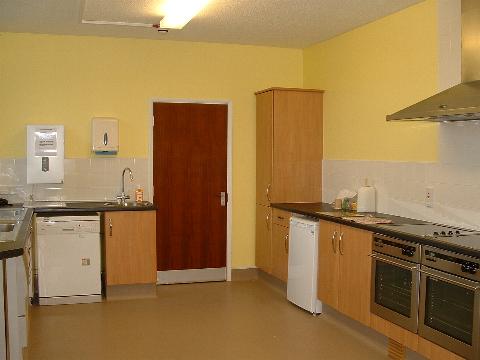
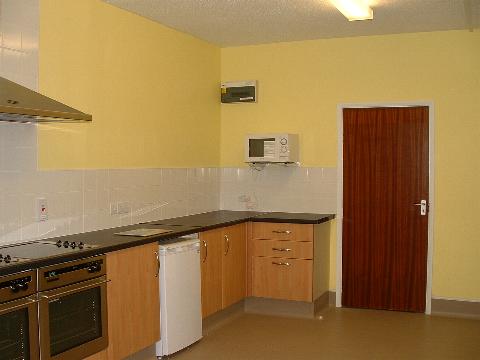
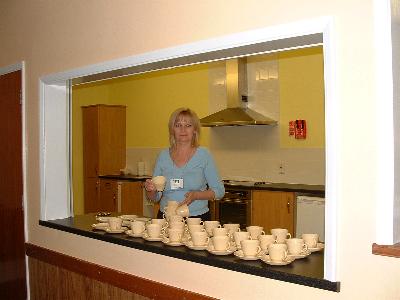
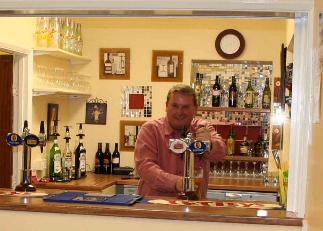
LEFT: New Kitchen, ABOVE: Trevor Miller, our Designated Premises Supervisor (Licencing Act 2003) at the pumps of the new hall bar. BELOW: Official opening and Sheila Knight making cups of tea in the new kitchen.
Phase Three began in the autumn of 2007 to provide a fenced area at the rear of the Westwick Room, to be partly down to tarmac and partly down to garden. The dustbin area would also be repositioned and a ramp provided to the fire-exit door.
2008 Shortly into the new year 2008, work was finally completed and Margaret Rayner, LGVA's Vice-Chairman and Chairman of Hall Management, was able to announce that the mission to update and alter the Village Hall was complete.
THE FACILITIES WE NOW HAVE ON OFFER ARE AS FOLLOWS:
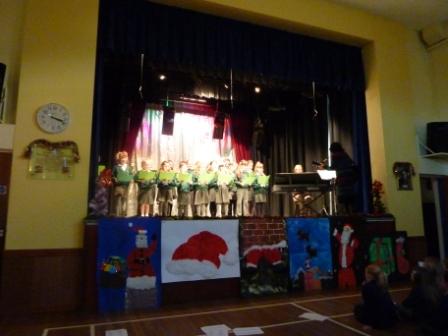
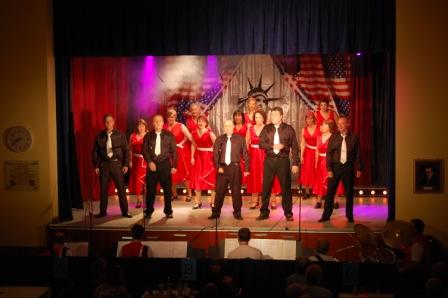
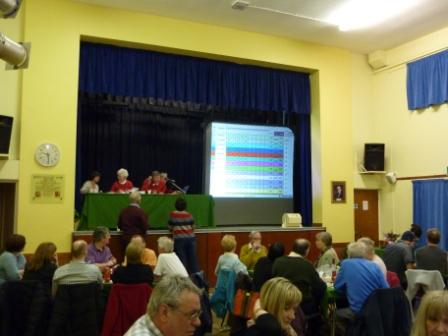
The Main Hall has been redecorated and refurbished and now has its own dedicated kitchen and serving area. There is also a bar available for hire should you require. The room is suitable for lectures, concerts, plays, sports activities or parties. It has a stage with stage lighting, PA system, hearing induction loop and a projection screen.
2005- January 2008: Major alterations to the hall in order to create more flexable meeting rooms, a modern kitchen and bar, and protected outside play area for Playgroup. This took over two years in planning and finally getting to the stage where all was complete. Initial plans for a major extension had to be reconsidered once LGVA realised Big Lottery funding was not forthcoming.(Summer 2005) This led to a complete revamp of ideas, and new plans were drawn up to make better use of existing space rather than building on.
The plans, which were ultimately adopted in stages, included changing the Committee room and existing playgroup storage room into a large modern kitchen and dedicated bar area, and this work was finally completed by late autumn 2006.
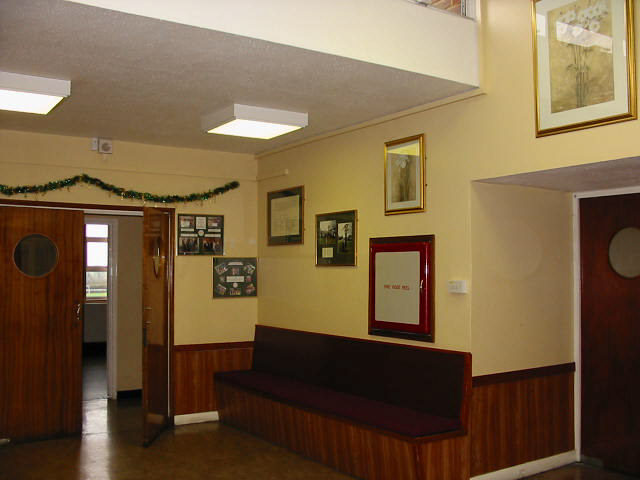
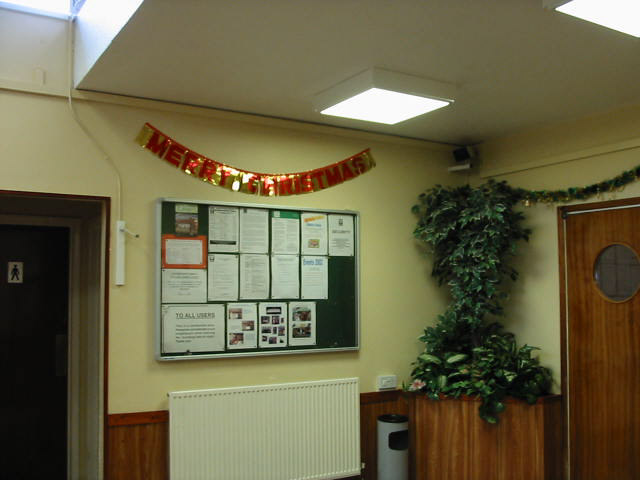
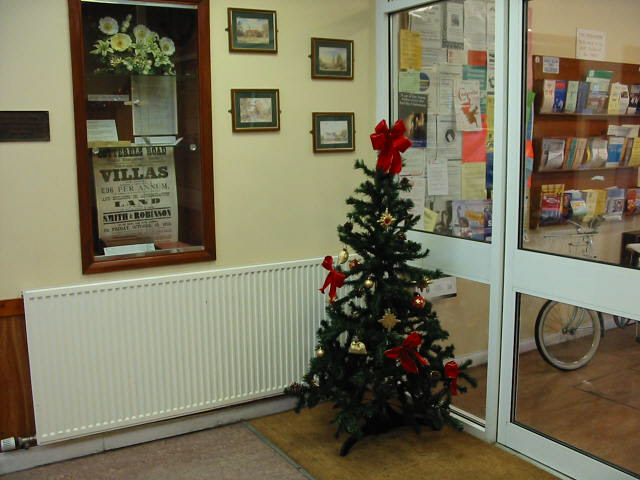
February 2001: Completion of renovation of entrance foyer to include built-in seating, built-in secure display cabinets, secure notice board, plants pictures etc.etc.
Photographs taken in the foyer the following Christmas.
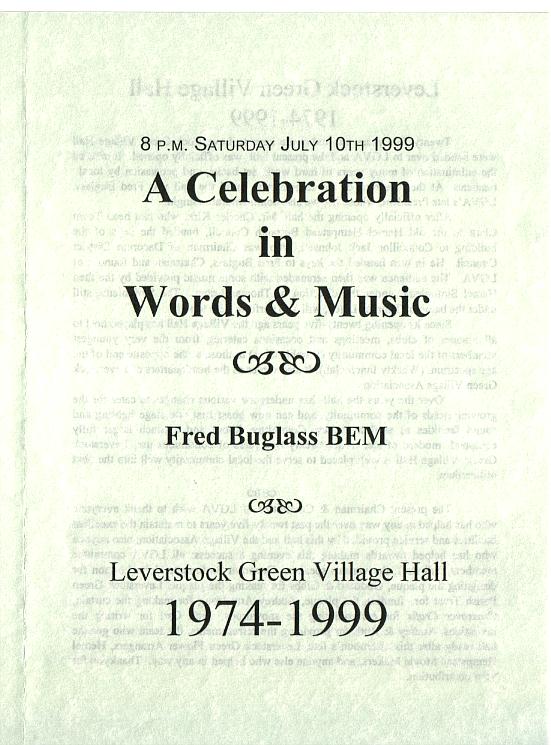
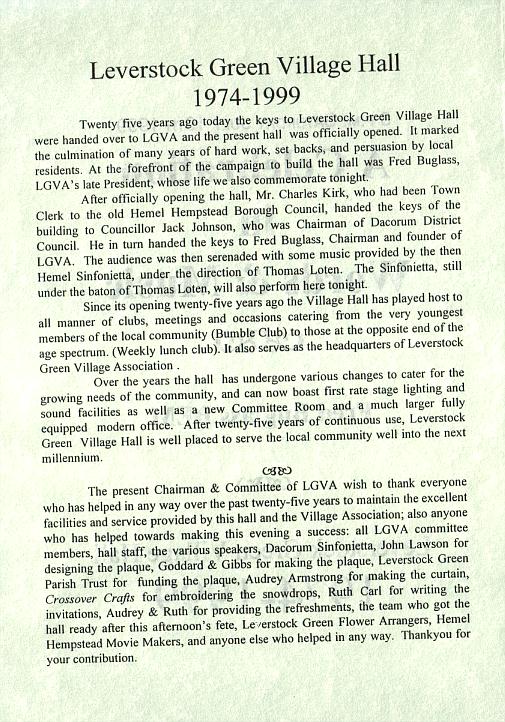
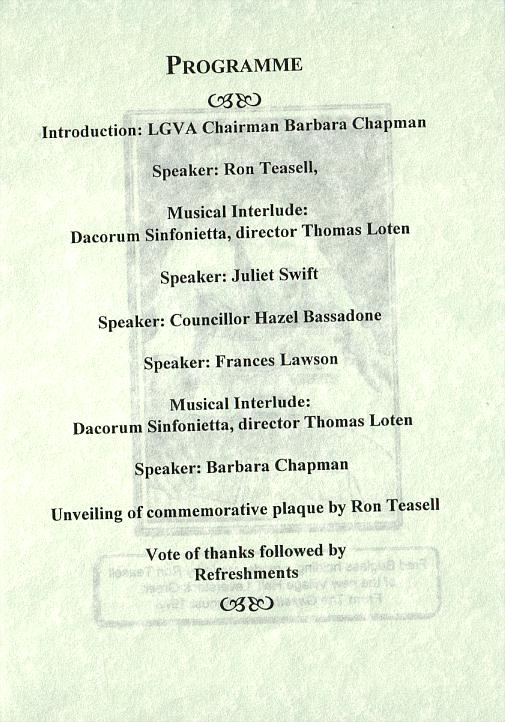
10th July 1999: Silver Jubilee celebrations of the opening of the present hall.
10th July 1974: PRESENT HALL OFFICIALLY OPENED,but not used after initial festival until October.
December 1974: All lettings transferred from old hall to present hall. Old Parish hall riddled with worm and rot, windows and doors could be pushed out. Only 3rd party insurance cover available.
1980: Demolition of old Parish Hall finally completed by voluntary labour - there was very little recoverable material.
March 1987: Parish Hall Trust finally sold land at corner of Pancake Lane with outline planning permission for £289,000 - the money from the sale was then invested.
January 1991: Agreed by trustees money from sale of land should be invested in Leverstock Green Village Association to be used for benefit of all in Leverstock Green. [N.B. This was not agreed to by the Charity Commissioners.]
February 1992: Leverstock Green Parish Hall Trust disbanded, new trust The Leverstock Green Parish Trust formed.
Summer 1994: New extension built onto hall creating a new Committee Room, making easier access to the kitchen from the main hall, and creating a much larger modern office.
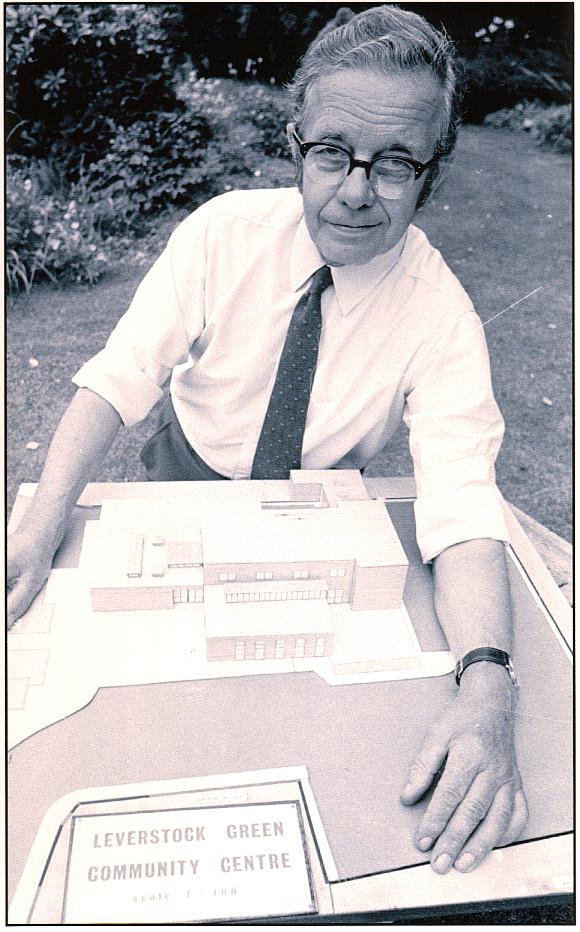
Above left: Fred Buglass with the model of the new Village Hall.
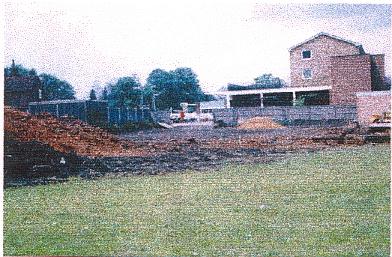
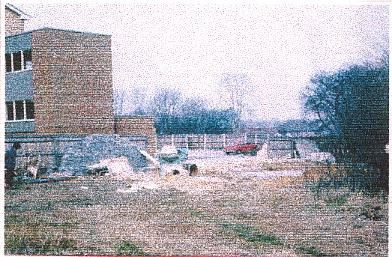
Right: Photos showing the land cleared and foundations being dug for the new hall. (Photos by Ron Teasell)
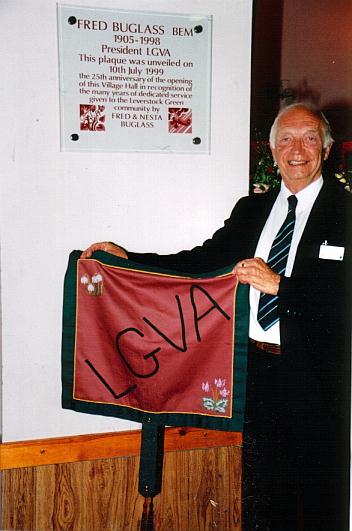
BELOW: Ron Teasell unveils the new commemorative plaque.
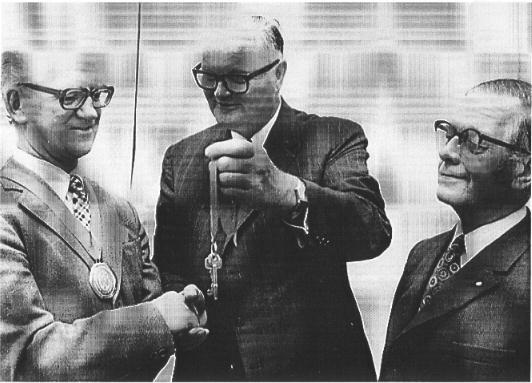
Town Clerk Charles Kirk, hands the keys of the new Leverstock Green village Hall to Chairman of Dacorum District Council, Councillor Jack Johnson. LGVA Chairman Fred Buglas Looks on.
With Phase 1 finished, work eventually started on Phase two in the spring of 2007. This involved stripping out the old kitchen, and moving and replacing internal walls so as to create an enlarged small hall, a bigger useable space for a small meeting room where the kitchen had been, with kitchenettes in each room and nursery toilets in what was to become the Westwick Room. The two new rooms were ready in time for the Summer Fete in 2007, with the larger of the two rooms being designated the Westwick Room, and the smaller the Buglass Room. The latter after the LGVA's late President and benefactor Fred Buglass whose legacy made the whole thing possible.
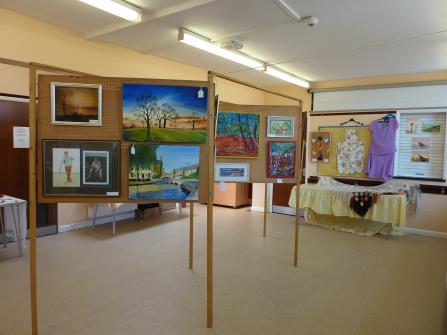
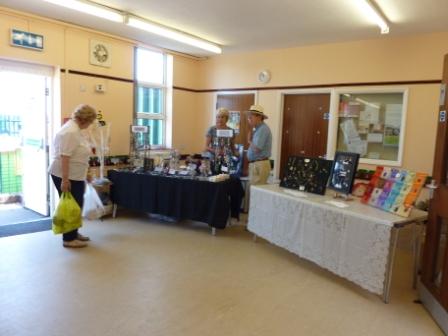
ABOVE: The Arts & Crafts Exhibition 14 July 2013 held in the Westwick Room.
The Buglass Room is the smallest of our rooms but is ideal for smaller group lectures, committee meetings, interest group activities and small parties. It has tea and coffee making facilities, and a projection screen. A portable hearing induction loop system is available.
There are vacancies in all rooms for both regular and casual hiring. Some of our groups only meet during term time so you might consider a school holiday booking involving a group of friends and children, or a business meeting. Please contact the Administrator for all bookings. (Tel 01442 268723 or email lgvaoffice@gmail.com )
The Westwick Room, which has been extended in size, has nursery sized toilets and has its own small kitchenette with cooker and microwave. This room houses the playgroup during the day, but is also available evenings and out of term time, for smaller groups attending lectures, art and craft groups, singing groups and parties. It has a projection screen. A portable hearing induction loop system is available.
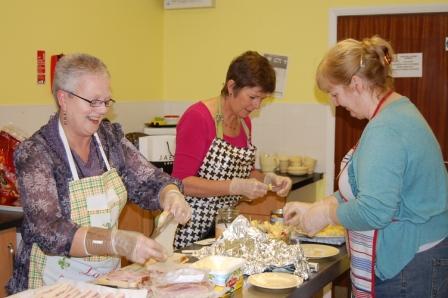
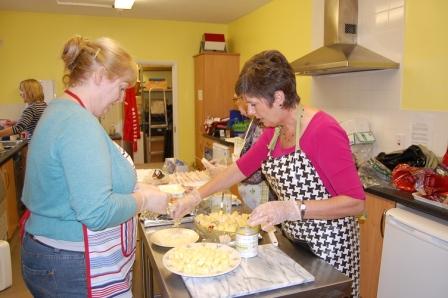
ABOVE: Preparing food in the Kitchen for the 50th Anniversary Celebrations, November 2012
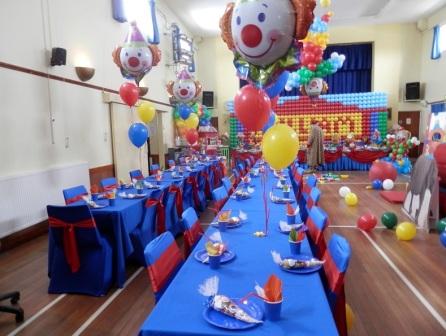
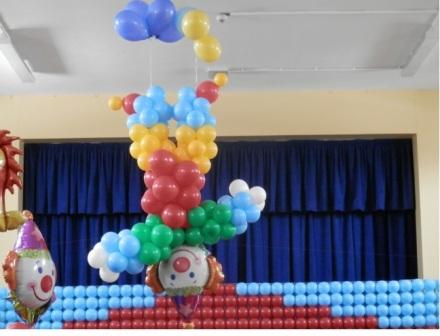
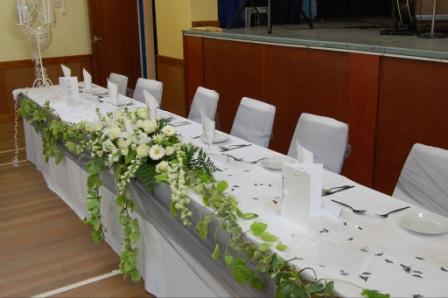
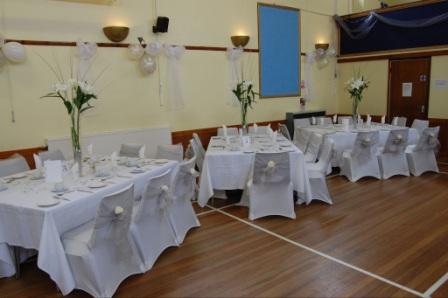
BELOW: The main hall is great for hosting parties and weddings.
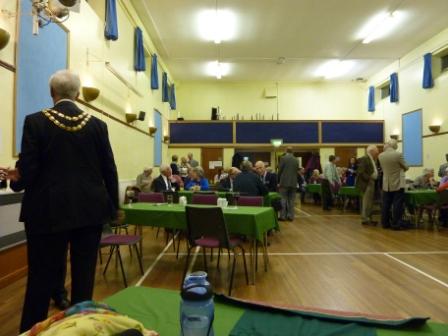
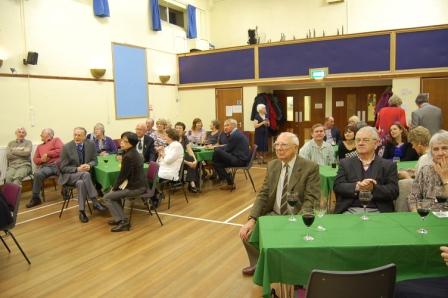
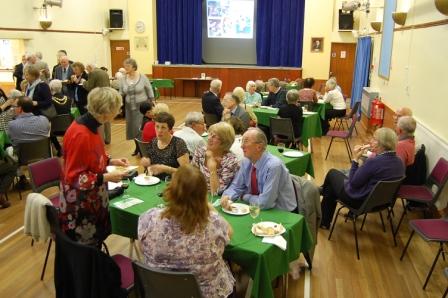
BELOW: The main hall is also used for concerts, quizes and special occasions. 1_ LGVA Christmas Concert2- Leverstock Green Players production3 - LGVA Quiz4 - LGVA 50th Anniversary get-to-gether.
1.
2.
3.
4a
4b
4c
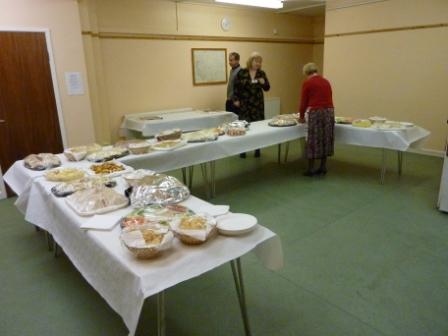
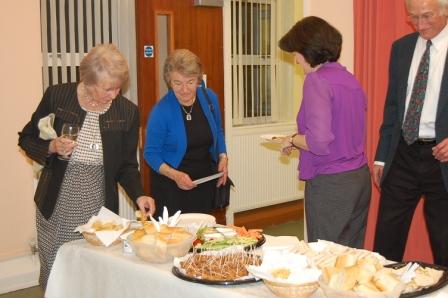
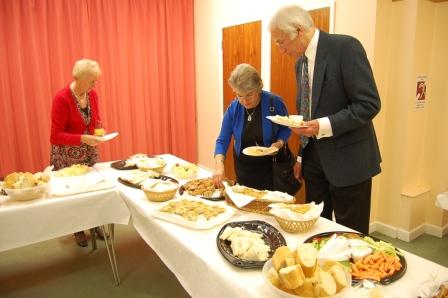
BELOW: The Buglass room set out with the buffet for the 50th anniversary celebrations.
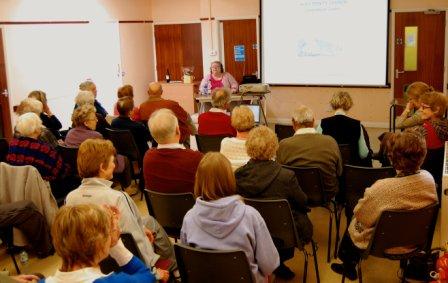
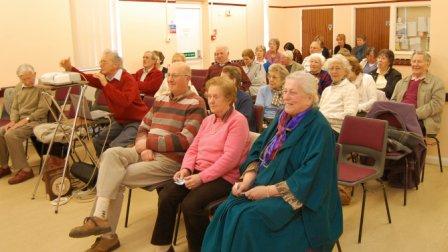
BELOW: A Local History talk by Barbara Chapman being given in the Westwick Room.